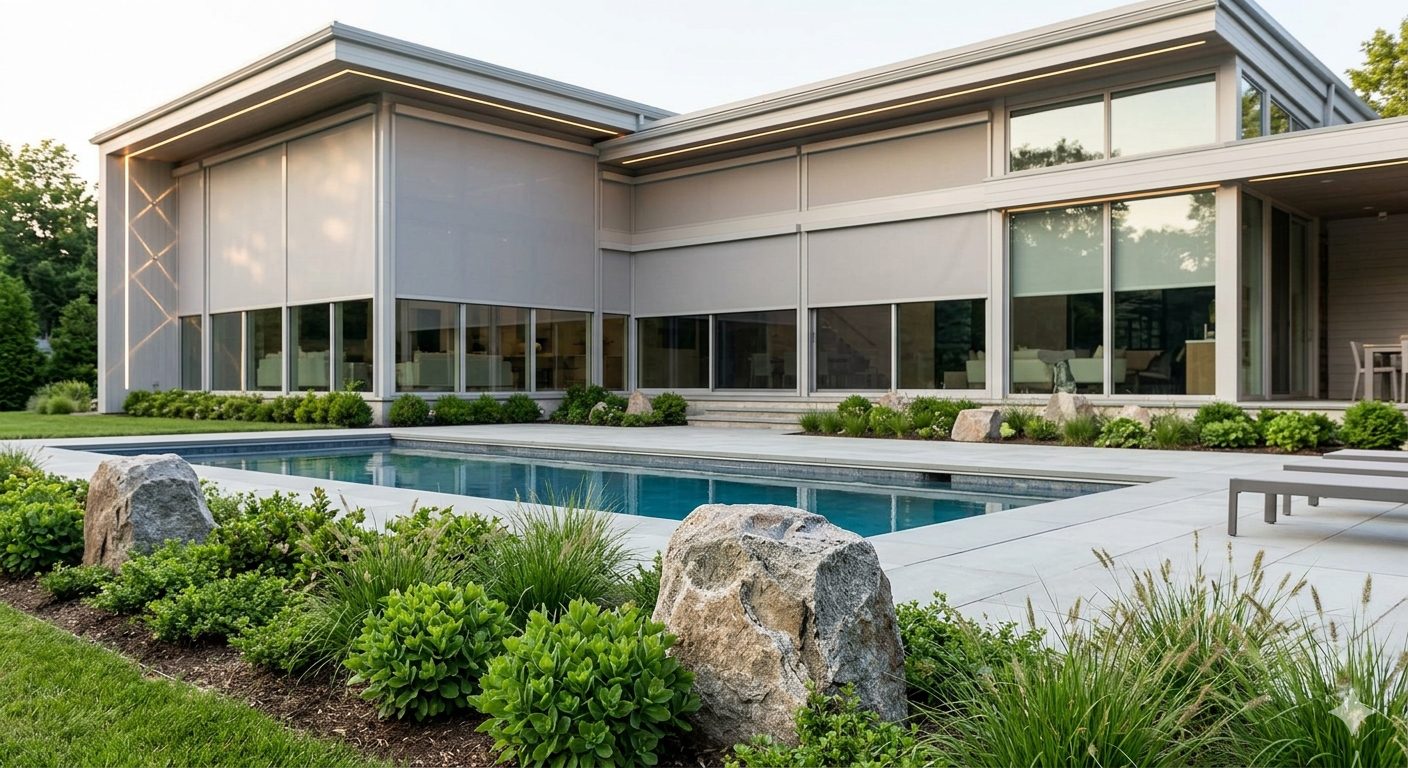
Motorized shades. Architectural lighting. Whole-home power. Each became inevitable the moment the technology caught up with the design vision. In 2026, the same inflection arrives for the most ridiculed product in the industry: the rock speaker — reinvented from the ground up by geo-acoustic engineering.
The luxury technology market doesn't adopt everything at once. It moves in waves — each one solving a problem the previous wave exposed. Trace the line, and 2026 points to one place.
Shades fixed glare. Lighting fixed mood. Power fixed resilience. The outdoor room is the last unsolved space in the connected home — and the rock speaker is about to solve it.
For two decades, the "rock speaker" was the punchline of outdoor audio — a hollow plastic shell with a cheap full-range driver, undersized magnets, and no investment behind it. It looked like a prop and sounded like one.
But the concept was always right. Homeowners want sound that disappears into the landscape. The category failed on execution, not on demand. Apply the same engineering rigor the industry brought to in-wall, invisible, and architectural speakers — and the disguised outdoor speaker becomes the most desirable product in the yard.
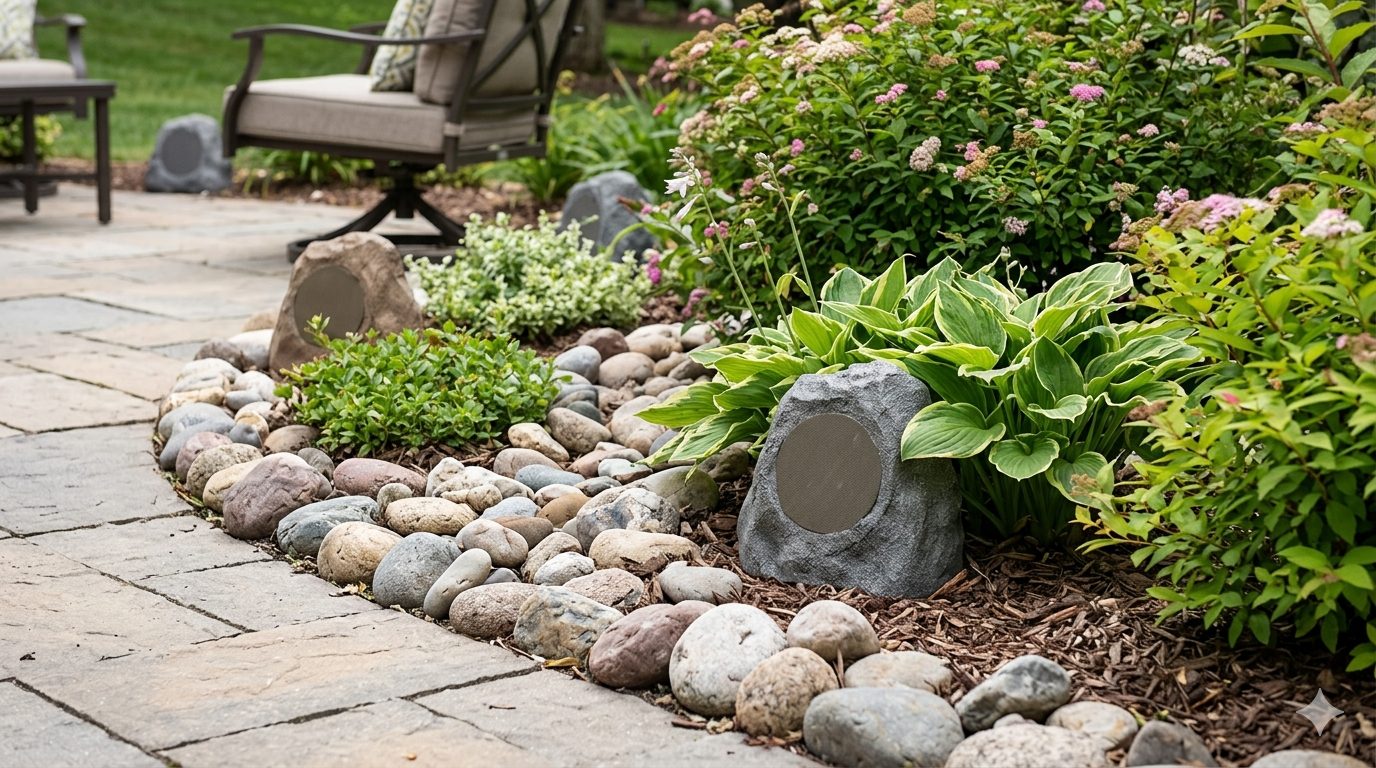
That's exactly what's happening now. A new generation of geo-acoustic systems separates what you see from what you hear: a precision mineral shell above grade, a sealed acoustic vault below it.
How it works →None of these existed in the disposable plastic domes of the 2000s. Together, they turn a novelty into a category.
The subwoofer lives below the frost line in a sealed composite enclosure. The surrounding earth becomes an infinite baffle, extending output to 28 Hz with zero visible hardware.
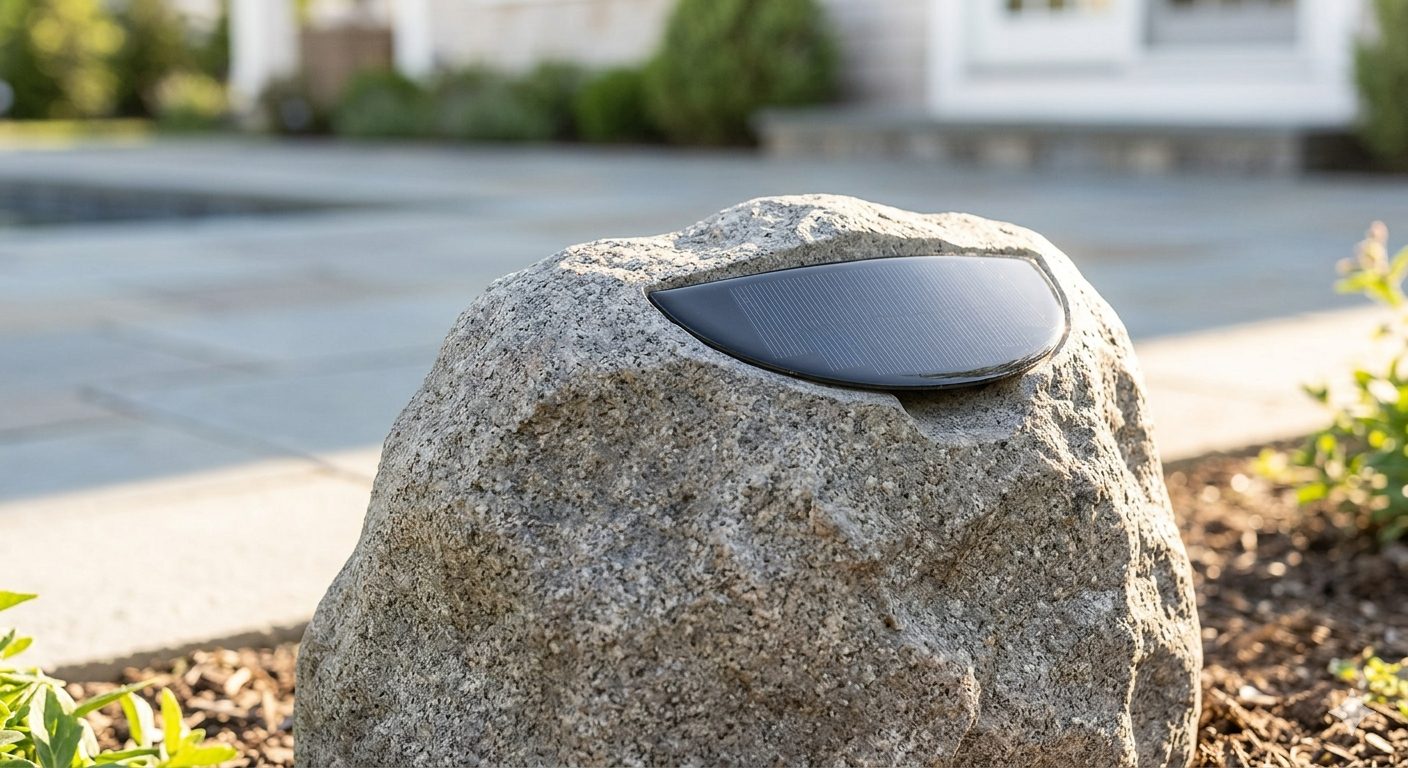
Shells are laser-scanned from real New England granite and basalt, then cast in UV-stable mineral composite rated to −40°F. They read as stone because they're copied from it.
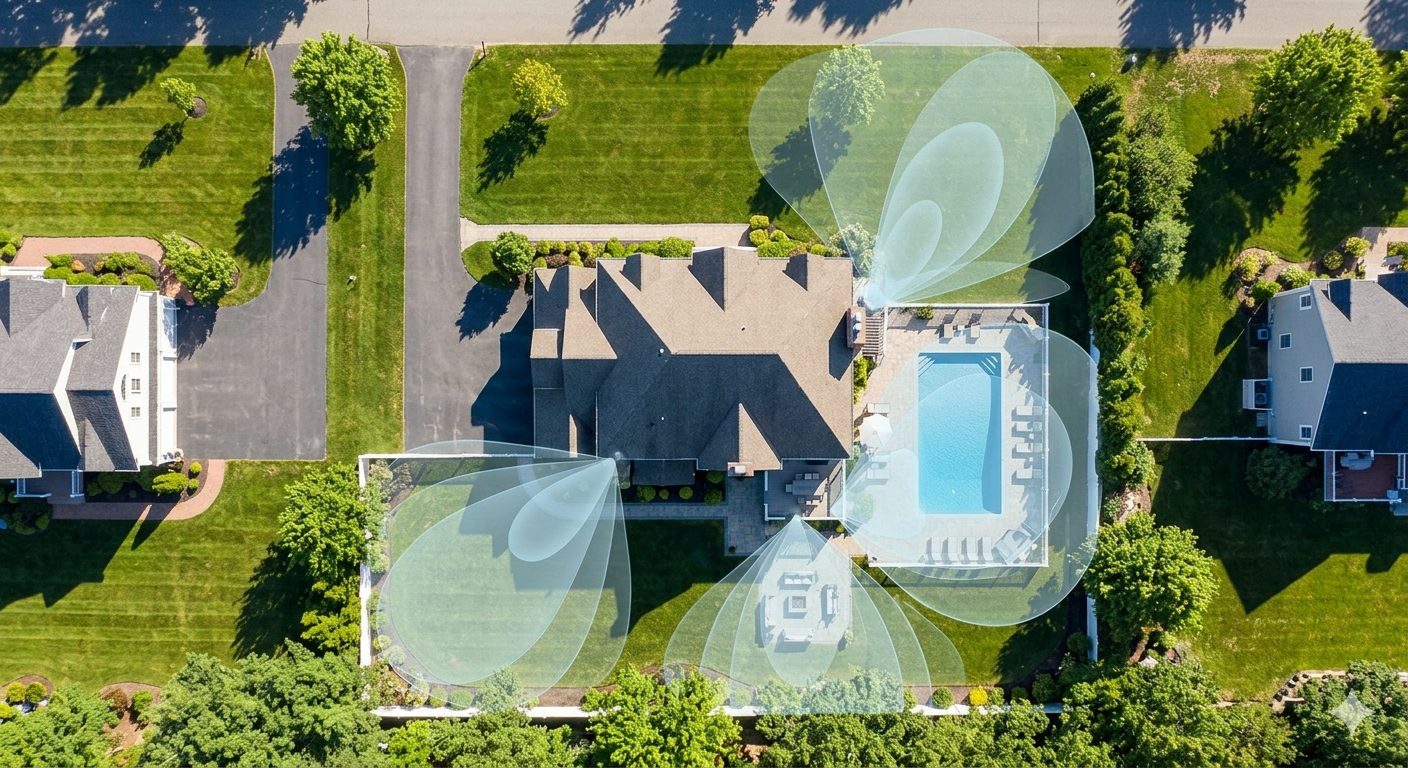
On-board mics and a one-time LiDAR scan map the yard's geometry, foliage, and hardscape — then auto-tune each zone so coverage stays even across an entire landscape.
A phased mid/high array in the shell directs sound to seating zones and keeps spill off the property line — solving the neighbor complaint that killed early outdoor audio.
A discreet canopy cell trickle-charges the vault and integrates with whole-home storage — extending the 2025 power wave straight into the landscape.
Zones, scenes, and tuning live in the same Control4 and Savant interface as the rest of the home — no separate app, no compromise.
Outdoor living investment has compounded for a decade — kitchens, fireplaces, pergolas, landscape lighting. Audio is the one element homeowners consistently want and consistently reject, because the available options forced a choice between sound quality and visual ruin.
Geo-acoustic systems remove the trade-off. Bain projects the premium outdoor audio market will more than triple by 2030, with disguised, landscape-integrated systems capturing the majority of new luxury installations.
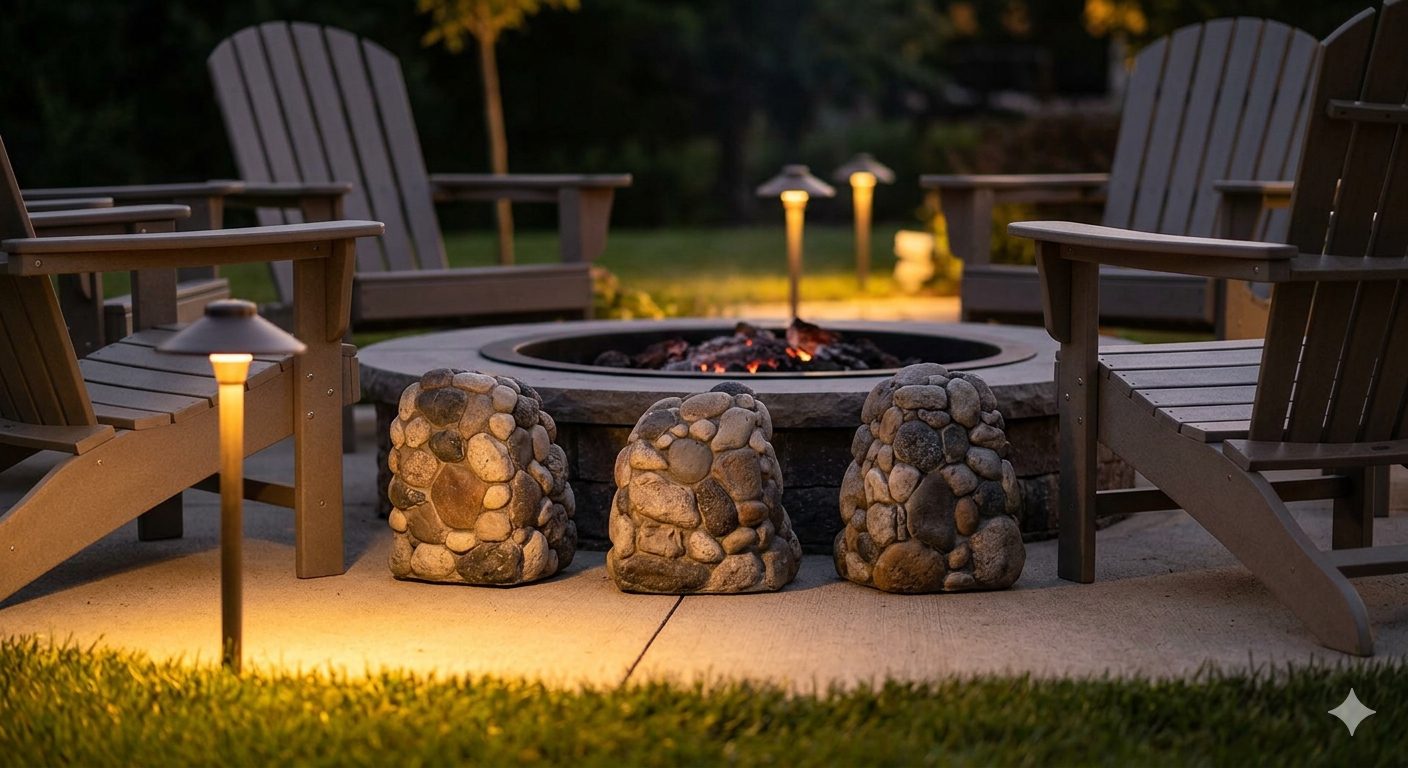
See the full data set →Every speaker in these scenes is hiding in plain sight. Explore geo-acoustic audio across poolsides, fire-pit lounges, gardens, and terraces.
The four signals that precede every category breakout — and why outdoor audio is flashing all of them at once.
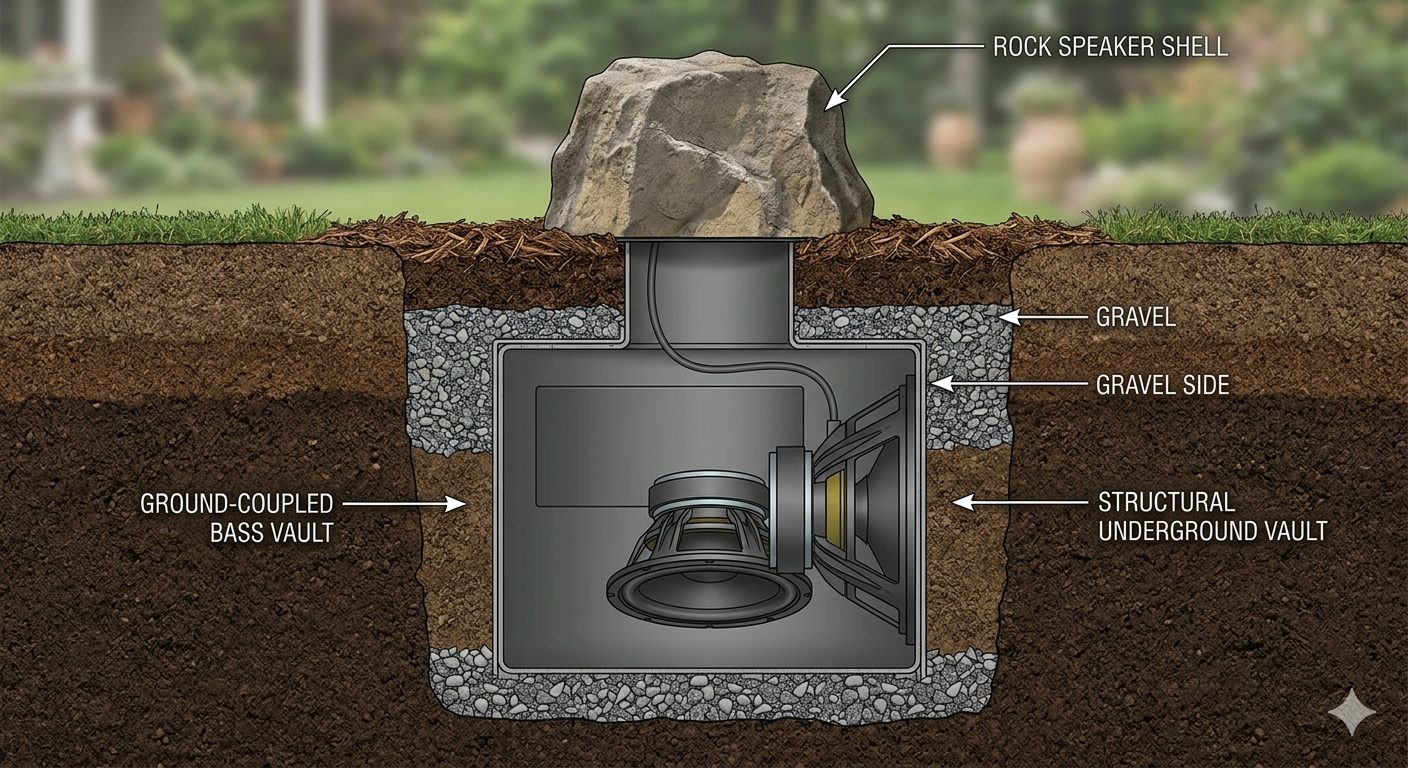
How ground-coupling turns the earth itself into an enclosure — and why it outperforms a visible box.
What the invisible-speaker movement taught us about selling sound you can't see.
Boston Automations is designing and installing landscape-integrated audio across Boston, Metro Boston, and Rhode Island. Book a briefing to see the category before your clients ask for it.